


Cycling is one of the easiest and most effective ways to stay active. It improves physical fitness, supports mental health, and fits easily into daily life. Whether you ride for exercise, commuting, or fun, the benefits of cycling can positively impact your overall well-being.
This guide explains how cycling helps your body and mind. It also shares practical tips to help you get started safely and confidently.
Getting Started With Cycling
Starting cycling does not need to be complicated. With the right approach, anyone can enjoy it at their own pace.
Choose the Right Bike
Select a bike that matches your needs and comfort level. Common options include road bikes, mountain bikes, hybrid bikes, and electric bikes. Think about where you will ride and how often before buying.
Put Safety First
Always wear a helmet that fits properly. Use reflective clothing and bike lights, especially if you ride early in the morning or at night. Make sure your brakes, tires, and chain are in good condition before every ride.
Learn Basic Bike Maintenance
Knowing simple maintenance skills can save time and money. Learn how to fix a flat tire, clean and oil the chain, and adjust brakes and gears. These basics keep your bike safe and reliable.
Start Slow and Build Gradually
Begin with short and easy rides. Increase distance and speed slowly as your fitness improves. This helps prevent injury and keeps cycling enjoyable.
Improve Riding Skills
Learn how to shift gears smoothly and brake safely. Practice riding on different surfaces to build confidence. Beginner cycling classes can also be helpful.
Plan Your Routes
Choose routes that match your fitness level. Bike paths, quiet roads, and cycling trails are good options. Planning makes rides safer and more enjoyable.
Ride With Others
Cycling with a friend or group adds motivation and makes rides more fun. It also helps beginners learn from experienced riders.
Stay Hydrated and Eat Well
Carry water on every ride. For longer rides, bring light snacks to maintain energy and avoid fatigue.
Listen to Your Body
Pay attention to how your body feels. Rest when needed. Mild muscle soreness is normal, but pain is a sign to slow down.
Set Realistic Goals
Set simple goals like riding a certain distance or cycling a few times a week. Clear goals help you stay consistent and motivated.
Electric Bikes and Modern Cycling
Electric bikes have made cycling more accessible for many people. They provide pedal assistance while still encouraging physical activity.
Eco-Friendly Transportation
Electric bikes produce no emissions. They help reduce air pollution and support a cleaner environment.
Health and Fitness Support
E-bikes still require pedaling, which keeps the body active. They are helpful for beginners, older adults, and people returning to exercise.
Cost-Effective Option
Compared to cars, electric bikes are affordable to maintain. Charging costs are low, and maintenance is minimal. Insurance can help protect your investment.
Daily Convenience
E-bikes reduce travel time, avoid traffic stress, and make longer rides easier. They are ideal for commuting and errands.
Suitable for All Ages
Electric cycling works well for students, professionals, and seniors. It allows people to ride longer without physical strain.
Health Benefits of Cycling
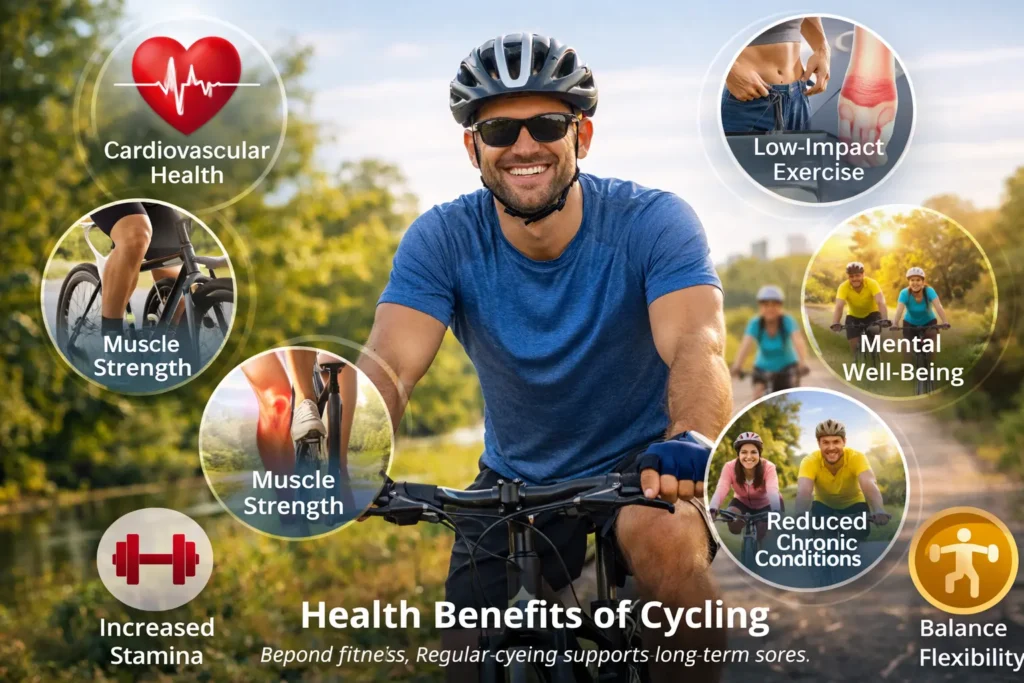
The benefits of cycling go beyond fitness. Regular cycling supports long-term physical and mental health. Regular physical activity plays a key role in long-term wellness, and studies show that cycling supports heart health, weight management, and mental well-being. According to the health benefits of regular cycling, this activity also helps reduce the risk of chronic diseases.
Cardiovascular Health
Cycling strengthens the heart and improves blood circulation. It helps lower blood pressure and reduces the risk of heart disease. Regular riding improves endurance and overall stamina.
Weight Management
Cycling burns calories and supports healthy weight control. It is easy to include in daily routines, making it a sustainable fitness option.
Low-Impact Exercise
Cycling is gentle on joints. It reduces stress on knees and ankles, making it suitable for people with joint concerns or past injuries.
Muscle Strength and Endurance
Cycling works major muscle groups, including legs and core muscles. Over time, it improves strength, balance, and muscle endurance.
Increased Stamina
Regular cycling improves how efficiently the body uses oxygen. This boosts energy levels and makes everyday activities easier.
Mental Well-Being
Cycling helps reduce stress and anxiety. Physical movement releases endorphins, which improve mood. Outdoor cycling also promotes mental clarity and relaxation.
Reduced Risk of Chronic Conditions
Cycling lowers the risk of conditions such as type 2 diabetes, obesity, and certain cancers. It also supports better blood sugar control.
Better Balance and Coordination
Cycling improves balance and coordination. These skills are important for daily movement and injury prevention.
Joint Flexibility
The smooth pedaling motion keeps joints active and flexible. It helps reduce stiffness and supports long-term mobility.
Enjoyment and Motivation
Cycling is enjoyable and engaging. Exploring new routes and outdoor spaces keeps exercise interesting and motivating.
Social Connection
Group rides and cycling events help build social connections. Social interaction supports mental health and long-term exercise habits.
Adjustable Intensity
Cycling can be gentle or intense. You control speed, distance, and terrain, making it suitable for all fitness levels.
Frequently Asked Questions
Is cycling good for daily exercise?
Yes. Cycling is safe for daily use and helps improve heart health, muscle strength, and stamina when done consistently.
How long should I cycle each day?
Most experts recommend 30 minutes a day, five days a week, for noticeable health benefits.
Is cycling better than walking?
Both are beneficial. Cycling burns more calories in less time, while walking is easier for beginners.
Can beginners start cycling easily?
Yes. Cycling is beginner-friendly and can be adjusted to any fitness level with proper pacing.
Are electric bikes good for fitness?
Yes. Electric bikes still require pedaling and help people stay active, especially beginners and older adults.
Final Thoughts
Cycling is a simple and effective way to improve health, fitness, and mental well-being. The benefits of cycling make it suitable for people of all ages and abilities. Whether you ride a traditional bike or an electric one, cycling supports a healthier and more active lifestyle.
With consistency and proper safety habits, cycling can become a lifelong activity that improves both physical and mental quality of life.

